

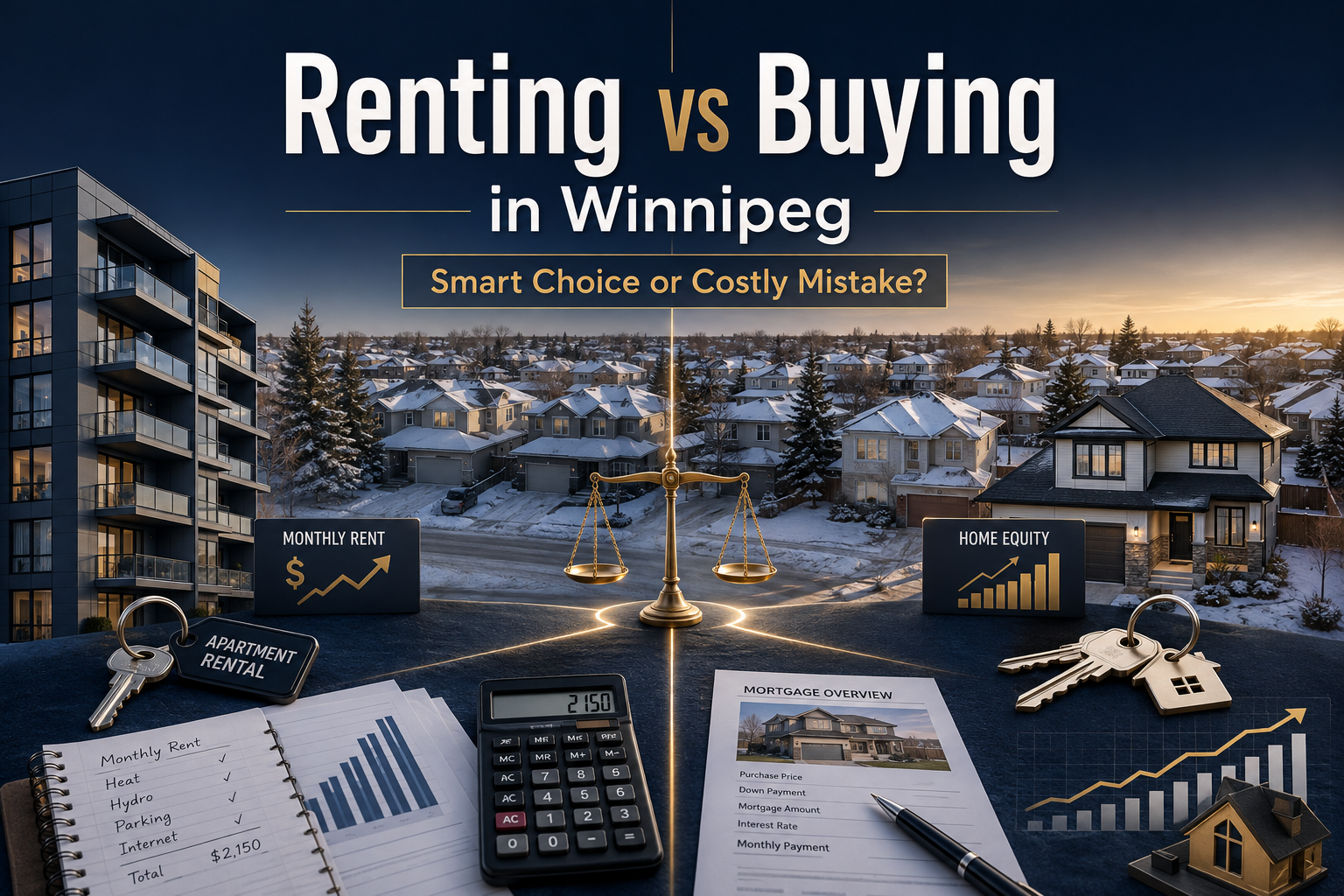
Renting vs buying in Winnipeg is an important financial decision for anyone planning their future in 2026. While buying a home can help build equity and provide long-term stability, renting offers flexibility and may require less upfront financial commitment.
The right choice depends on more than simply comparing a monthly mortgage payment with monthly rent. Buyers need to consider the down payment, property taxes, insurance, maintenance, and long-term financial goals. Renters should consider rent increases, housing availability, flexibility, and how long they plan to remain in one location.
Winnipeg’s housing market is also changing. The latest market data shows that property prices remain historically strong, while the number of available listings has increased. At the same time, the rental market is gradually becoming more balanced as additional rental supply enters the market.
So, which choice is better in 2026?
The answer depends on your individual situation.
Understanding Renting vs Buying in Winnipeg in 2026
Before deciding between renting and buying, it is important to understand that both options provide different benefits.
Buying a home means taking responsibility for a property, but it can also allow you to build equity over time. As you pay down your mortgage, you increase your ownership stake in the home.
Renting provides more flexibility. You may find it easier to move for a new job, change neighbourhoods, or adjust your housing situation without selling a property.
For many people, renting vs buying in Winnipeg comes down to three important questions:
- Can you comfortably afford the costs of homeownership?
- How long do you plan to stay in Winnipeg or your current neighbourhood?
- Are you financially prepared for unexpected home expenses?
There is no single answer that works for everyone.
What Is Happening in the Winnipeg Housing Market?
The latest available Winnipeg Regional Real Estate Board data provides important context for buyers and sellers.
Through August 2026, the year-to-date average price for residential detached homes reached $468,679, up 3% from the previous year and 8% above the five-year average. The year-to-date condominium average price reached $288,834, also up 3% from the previous year.
However, market activity has become more balanced.
In August 2026, active MLS® listings reached 4,102, up 13% compared with August 2025. More available properties can give buyers additional choices and potentially more opportunities to compare homes before making a decision.
Buyers can review current Winnipeg Property Listings to compare asking prices, neighbourhoods, property types, and available inventory.
For people considering buying, this means the market should be evaluated carefully rather than simply assuming that prices will move in one direction.
The Benefits of Buying a Home in Winnipeg
Buying a home can offer several important advantages.
Building Equity
One of the biggest benefits of homeownership is the opportunity to build equity.
Each mortgage payment may help reduce your loan balance, depending on the structure of your mortgage. If the property’s value increases over time, your equity could also grow.
Greater Stability
Homeownership can provide more long-term stability. You are not dependent on a landlord’s decision to sell the property or change the terms of your rental agreement.
Freedom to Personalize Your Home
Homeowners generally have greater control over renovations, decorating, landscaping, and other improvements.
You can make your home reflect your personal lifestyle, although certain regulations and permit requirements may apply.
Potential Long-Term Appreciation
Real estate values can change over time, and appreciation is never guaranteed. However, owning property may provide long-term financial benefits if the home’s value increases.
Winnipeg’s detached and condominium average prices have remained historically strong in 2026, although individual neighbourhoods and property types can perform differently.
The Costs of Buying a Home
Buying is not always automatically cheaper than renting.
Homeowners should prepare for costs including:
- Down payment
- Mortgage payments
- Property taxes
- Home insurance
- Utilities
- Maintenance and repairs
- Legal fees and closing costs
- Potential condominium fees
Unexpected expenses are particularly important.
A homeowner may need to repair a roof, replace a furnace, fix plumbing, or address other maintenance problems. Renters generally do not have the same responsibility for major building repairs.
Before purchasing, buyers should create a realistic monthly budget instead of focusing only on the mortgage payment.
Why Renting Can Still Make Sense in 2026
Renting is sometimes viewed as simply paying for someone else’s property, but that perspective does not consider the full financial picture.
Renting can provide valuable benefits, particularly for people who need flexibility.
More Flexibility
Renting may be a better option if you expect to move within a few years.
Selling a home involves costs and can take time. A renter may find it easier to relocate when a lease ends.
Lower Upfront Costs
Buying a home requires significant upfront savings.
Renters generally do not need a down payment and may avoid many of the closing costs associated with purchasing a property.
Fewer Maintenance Responsibilities
Major repairs and building maintenance are typically the responsibility of the property owner, depending on the rental agreement and applicable laws.
This can make budgeting easier for some renters.
What Is Happening in Winnipeg’s Rental Market?
Winnipeg’s rental market has been gradually changing as additional rental units become available.
CMHC’s 2026 outlook projected a higher rental vacancy rate for Winnipeg compared with 2025, alongside continued growth in housing and rental supply. Its baseline forecast projected a 2026 vacancy rate of 4.4% and an average two-bedroom rent of approximately $1,620.
CMHC has also reported that increased rental supply and slower demand are contributing to more balanced rental conditions in many Canadian markets.
For renters, more available units can create additional choice.
However, rental conditions vary depending on location, property type, building age, and price range.
How Mortgage Costs Affect the Decision to Buy
Mortgage costs remain one of the most important considerations for buyers.
Your actual mortgage rate depends on factors such as:
- Your lender
- Mortgage type
- Credit profile
- Down payment
- Mortgage term
- Amortization period
The Bank of Canada maintained its policy interest rate at 2.25% on September 2, 2026, while posted mortgage rates offered by major banks vary significantly by mortgage product.
This means buyers should avoid assuming that one advertised rate will apply to everyone.
Speaking with a mortgage professional before beginning your home search can help you understand your realistic purchasing budget.
Renting vs Buying in Winnipeg: A Simple Comparison
Renting May Be Better If You:
- Expect to move soon
- Want greater flexibility
- Do not have enough savings for a down payment
- Prefer fewer maintenance responsibilities
- Are still deciding where you want to live
- Want to avoid the financial risks of unexpected home repairs
Buying May Be Better If You:
- Plan to stay in one location for several years
- Have stable income
- Have savings for a down payment and closing costs
- Can comfortably manage ongoing homeownership expenses
- Want to build long-term equity
- Want greater control over your living space
How Long Do You Plan to Stay in Your Home?
Your expected length of ownership is one of the most important factors in the decision.
Buying a home involves upfront and eventual selling costs. If you purchase a property and move again quickly, you may not have enough time to benefit from long-term equity growth.
Someone planning to stay in a Winnipeg neighbourhood for many years may have a different calculation than someone expecting to relocate within two years.
Think carefully about:
- Career plans
- Family needs
- Lifestyle changes
- Future income
- Preferred neighbourhood
- Long-term financial goals
What Should First-Time Buyers Consider?
First-time buyers should avoid stretching their budget simply because they qualify for a larger mortgage.
A comfortable home budget should leave room for:
- Emergency savings
- Maintenance
- Future financial goals
- Retirement savings
- Transportation
- Everyday living expenses
Buyers should also compare different neighbourhoods and property types.
A condominium may offer a lower purchase price than a detached home, but monthly condo fees should be included when calculating affordability.
Before making an offer, buyers should review recent comparable sales and explore available Winnipeg Homes For Sale to better understand current prices and competition.
What Does This Mean for Winnipeg Home Sellers?
The decision between renting and buying also affects sellers.
When potential buyers have more available homes to choose from, sellers need to price their properties strategically.
The August 2026 market showed higher active listings compared with the previous year, while year-to-date home prices remained strong. This combination means sellers should pay close attention to current competition in their specific neighbourhood and property category.
A successful selling strategy should consider:
- Recent comparable sales
- Current competing listings
- Property condition
- Pricing strategy
- Marketing quality
- Buyer demand in the neighbourhood
A citywide average does not determine the value of every individual home.
Sellers can also review our Home Buying & Selling Tips for additional guidance on preparing a property and navigating Winnipeg’s changing real estate market.
Is Renting or Buying Better Financially?
The answer depends on your individual numbers.
Buying can help you build equity, but it also creates additional expenses and financial responsibility.
Renting may allow you to invest or save money that would otherwise go toward a down payment, property maintenance, and other ownership costs.
When comparing renting vs buying in Winnipeg, calculate the complete cost of each option.
For buying, consider:
Mortgage + property taxes + insurance + maintenance + utilities + other ownership costs
For renting, consider:
Monthly rent + utilities + tenant insurance + expected rent increases
Then compare these costs with your income, savings, and future goals.
So, Should You Rent or Buy in Winnipeg in 2026?
For people who are financially prepared and planning to stay in a property for the long term, buying may offer the opportunity to build equity and establish stability.
For people who need flexibility or are not yet financially prepared for the responsibilities of homeownership, renting may be the smarter choice.
The latest market information suggests that Winnipeg buyers have more active listings to consider than a year earlier, while prices remain historically strong. Meanwhile, increased rental supply may provide renters with more options.
That makes 2026 less about finding one universally correct answer and more about making a decision based on your personal circumstances.
Final Thoughts: Renting vs Buying in Winnipeg
Renting vs buying in Winnipeg should not be viewed as a competition where one option is always better.
Buying can provide long-term stability and the potential to build equity. Renting can provide flexibility and fewer responsibilities.
Your best choice depends on your finances, lifestyle, timeline, and future goals.
Before making a major decision, understand the full cost of each option and research current Winnipeg market conditions.
Whether you decide to rent or buy, making an informed decision today can help create greater financial confidence in the future.